

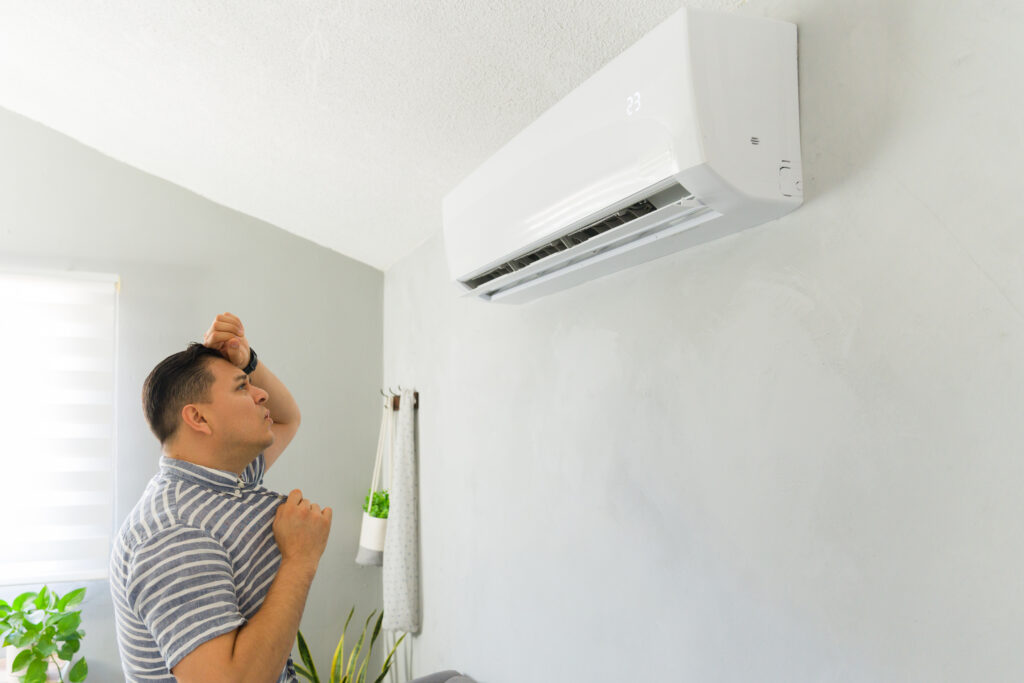
If your air conditioner is running but your home still feels sticky, damp, or uncomfortable, humidity may be the problem. Your AC does more than cool the air—it also removes moisture as it operates.
When indoor humidity remains high even while the air conditioner is running, something may be preventing your system from properly controlling moisture.
This can be especially noticeable during the hot, humid New Jersey summer.
How Does Your AC Remove Humidity?
As warm indoor air passes over the cold evaporator coil inside your AC system, moisture in the air condenses on the coil. That moisture collects and drains away through the condensate system.
This process helps lower both the temperature and humidity inside your home.
If your AC isn’t running long enough, isn’t operating properly, or isn’t appropriately sized for your home, it may cool the house without removing enough moisture.
Common Reasons Your House Is Humid While the AC Is Running
Several different issues can contribute to high indoor humidity.
1. Your AC Is Oversized
It may seem like a larger AC would always be better, but that’s not necessarily the case.
An oversized air conditioner can cool your home very quickly and shut off before it has enough time to remove a significant amount of moisture.
This can leave your home feeling:
- Cool but sticky
- Damp
- Muggy
- Uncomfortable
Proper sizing is important when installing a new HVAC system.
2. Your AC Isn’t Running Long Enough
Your air conditioner needs sufficient runtime to remove moisture effectively.
If the system reaches the thermostat’s temperature setting very quickly, it may shut off before adequately dehumidifying the air.
Short cycling can also increase wear on the system and may indicate an underlying HVAC problem.
3. Your Air Conditioner Has a Problem
If your AC isn’t cooling or operating properly, humidity control can suffer.
Potential issues include:
- Low refrigerant
- Dirty evaporator coils
- Restricted airflow
- Blower motor problems
- Clogged condensate drains
- Thermostat problems
If your home’s humidity suddenly increases along with reduced cooling performance, professional HVAC service may be needed.
4. Your Air Filter Is Dirty
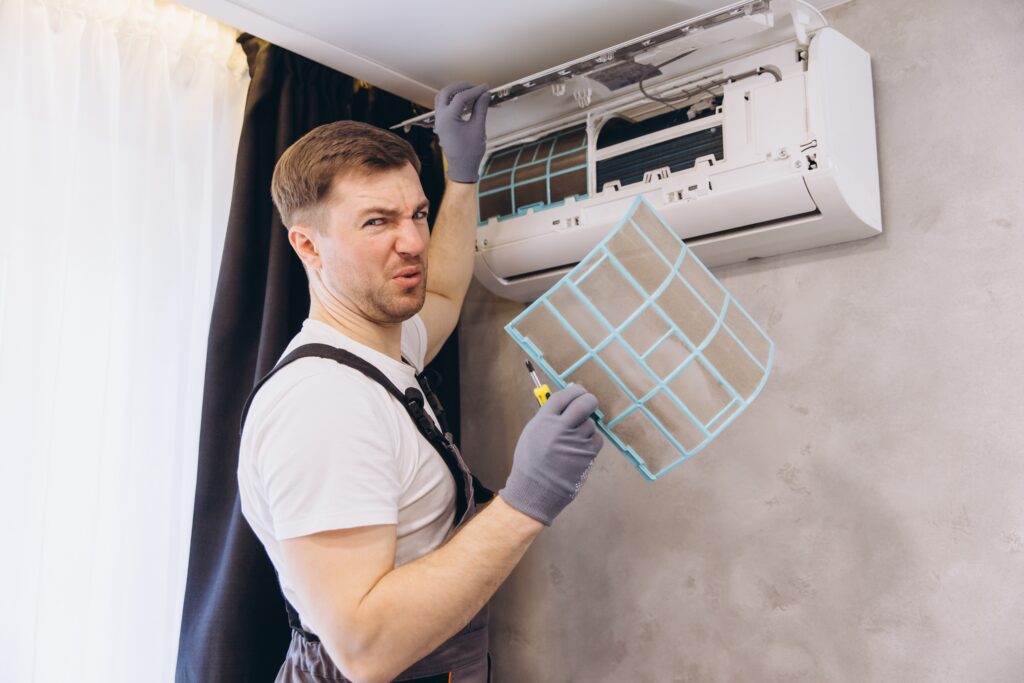
A clogged air filter can restrict airflow through your HVAC system.
Restricted airflow can affect cooling performance and may contribute to problems with the evaporator coil and condensate removal.
Check your filter regularly and replace it when necessary according to the manufacturer’s recommendations.
5. The Condensate Drain Is Clogged
Your AC removes moisture from the air by collecting condensation.
That water needs somewhere to go.
If the condensate drain becomes clogged, water may accumulate in the system rather than draining properly.
Signs of a potential condensate drainage problem include:
- Water around the indoor unit
- Musty odors
- Increased indoor humidity
- Water stains
- AC shutdowns on systems with safety switches
A clogged drain should be addressed promptly to help prevent water damage and additional HVAC problems.
6. Your Home Has Air Leaks
Your AC may be working properly while outside humidity continues entering your home.
Common sources include:
- Gaps around doors and windows
- Poorly sealed ductwork
- Attic air leaks
- Basement or crawl-space moisture
- Cracks around utility penetrations
If your home has significant air leakage, your HVAC system may have difficulty keeping indoor humidity under control.
Improving air sealing can help reduce unwanted outdoor moisture infiltration.
7. Your Ductwork Has Problems
Your duct system plays an important role in distributing conditioned air throughout the home.
Leaky or poorly insulated ducts can affect system efficiency and comfort.
Ductwork running through hot, humid areas such as attics can be particularly important to inspect.
If conditioned air is escaping before it reaches your living spaces, your system may run longer without delivering the comfort you expect.
8. Your Home Has Too Much Moisture
Sometimes the AC isn’t the primary cause of high humidity.
Indoor moisture can come from:
- Showers
- Cooking
- Drying clothes
- Indoor plants
- Wet basements
- Poor bathroom ventilation
- Water leaks
If your home has a persistent moisture source, your AC may not be able to keep house humidity at a comfortable level by itself.
What Humidity Level Should Your Home Have?
For many homes, an indoor relative humidity level of roughly 30% to 50% is generally considered a comfortable range, although the ideal level can vary based on temperature, season, and the household.
If indoor humidity regularly stays above approximately 60%, your home may feel noticeably damp and you may have greater concerns related to moisture.
A basic indoor humidity monitor can help you understand what is happening inside your home.
Signs Your Home May Have Too Much Humidity
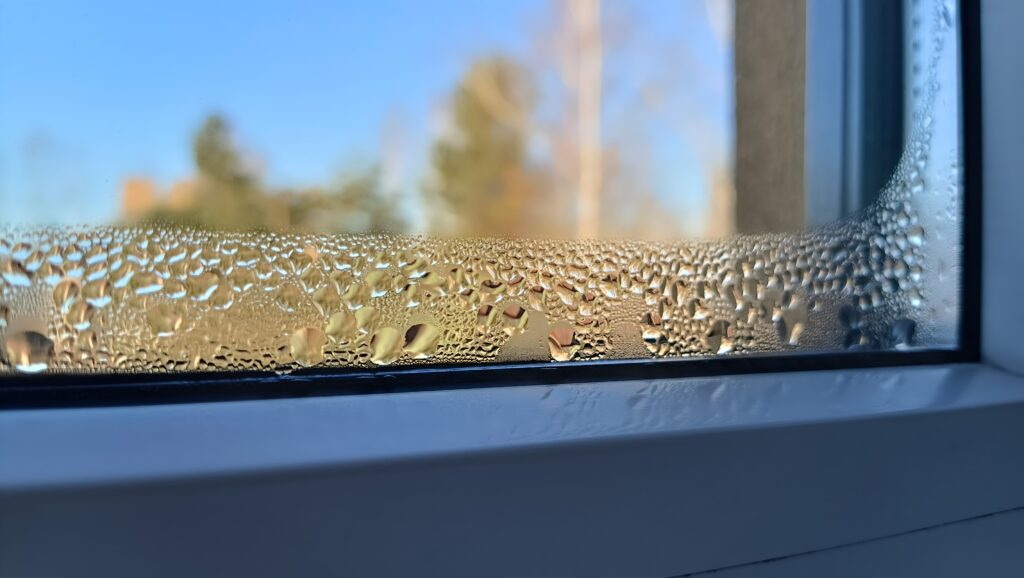
High house humidity isn’t always obvious from a humidity reading.
You may notice:
- A sticky or clammy feeling
- Condensation on windows
- Musty odors
- Damp areas
- Rooms that feel warmer than others
- Difficulty keeping the home comfortable
- Visible moisture around vents or HVAC equipment
If these issues continue despite your AC running regularly, it’s worth investigating the cause.
What Can You Do to Lower Indoor Humidity?
There are several steps homeowners can take.
Replace Your Air Filter
A clean filter helps maintain proper airflow.
Use Bathroom Exhaust Fans
Run exhaust fans during and after showers to remove moisture before it spreads throughout the home.
Use Kitchen Ventilation
Cooking can introduce significant moisture into the air. Use your range hood or other appropriate ventilation when cooking.
Check for Plumbing Leaks
Even a small leak can contribute to ongoing moisture problems.
Keep Doors and Windows Closed While the AC Runs
Leaving doors or windows open allows warm, humid outdoor air into the home and makes it harder for the AC to maintain comfortable conditions.
Consider a Dehumidifier
If house humidity remains high despite a properly functioning AC system, a dedicated whole-home or portable dehumidifier may be worth considering.
Can a Dehumidifier Help?
Yes. A dehumidifier can remove moisture from the air independently of the cooling process.
A dedicated system may be particularly useful in homes that:
- Have naturally high indoor humidity
- Have damp basements
- Experience high summer humidity
- Have an AC system that doesn’t adequately control moisture
However, a dehumidifier shouldn’t be used to hide an underlying HVAC problem.
If your AC isn’t operating correctly, fixing the source of the problem should come first.
Should You Replace Your AC If Your Home Is Humid?
Not necessarily.
High house humidity doesn’t automatically mean your AC needs to be replaced.
The problem could be caused by:
- Poor airflow
- A dirty filter
- Refrigerant problems
- Drainage issues
- Duct leaks
- Incorrect sizing
- Poor insulation or air sealing
A professional HVAC evaluation can determine whether repair, maintenance, improved humidity control, or replacement makes the most sense.
If your system is older and experiencing multiple problems, replacement may be worth considering.
When Should You Call an HVAC Professional?
Consider scheduling professional service if:
- Your home remains humid despite the AC running
- The AC runs constantly
- The system short cycles
- You notice water around the indoor unit
- Your AC isn’t cooling properly
- You notice musty odors
- Indoor humidity stays consistently high
- Your energy bills have increased
- Your system is repeatedly breaking down
An HVAC professional can evaluate the system, airflow, refrigerant, drainage, ductwork, and overall operation to identify potential causes.
AC and HVAC Services in South Jersey
South Jersey summers can bring high temperatures and significant house humidity. A properly functioning HVAC system should provide both cooling and moisture removal, helping your home feel comfortable throughout the season.
Homeowners in:
- Hammonton
- Egg Harbor Township
- Galloway
- Berlin
- Mays Landing
- Waterford
- Surrounding South Jersey communities
can benefit from professional AC repair, HVAC maintenance, system inspections, and new AC installations.
Final Thoughts

If your house feels humid even though the AC is running, don’t assume that the system simply isn’t powerful enough. Oversized equipment, restricted airflow, clogged condensate drains, duct problems, air leaks, and other issues can all affect your home’s humidity levels.
Addressing the underlying cause can improve comfort and help your HVAC system operate more efficiently.
If your home feels humid, sticky, or uncomfortable even with the AC running, WYNNOW is here to help. We provide professional AC repair, maintenance, inspections, and HVAC services throughout South Jersey to help homeowners stay cool and comfortable all summer long. Also if you found this blog informative, please be sure to check us out on Facebook, Instagram and X!