

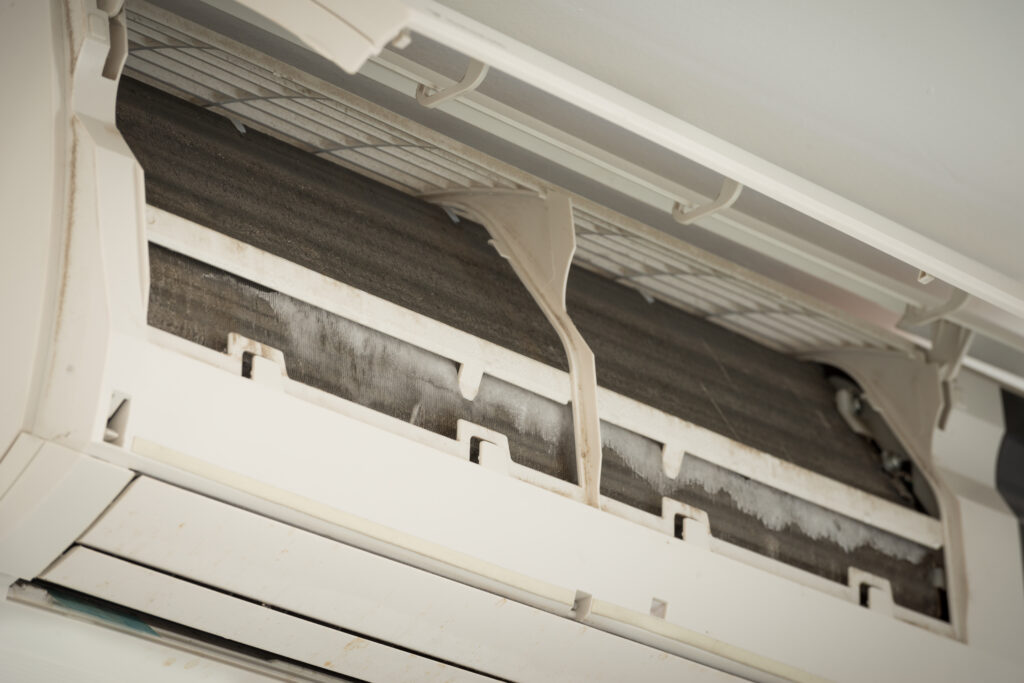
If you notice ice or frost building up on your air conditioner during the summer, it may seem strange. After all, your AC is supposed to keep your home cool—not freeze over.
A frozen air conditioner is usually a sign that something isn’t working properly. Continuing to run the system while it’s frozen can place additional strain on the equipment and potentially lead to more expensive repairs.
The good news is that many causes of a frozen AC can be diagnosed and repaired before they become major problems.
Why Does an AC Unit Freeze Up?
An air conditioner needs proper airflow and the right refrigerant conditions to operate correctly. When something disrupts that balance, the evaporator coil can become too cold and moisture can freeze onto the coil.
Common causes include:
- Restricted airflow
- Dirty air filters
- Low refrigerant
- Dirty evaporator coils
- Blower motor problems
- Blocked ductwork
- Thermostat issues
- Mechanical problems
Let’s take a closer look at some of the most common causes.
1. A Dirty Air Filter
One of the simplest causes of a frozen AC is a dirty or clogged air filter.
Your air filter helps remove dust and debris from the air before it circulates through your HVAC system. When the filter becomes heavily clogged, it can restrict airflow across the evaporator coil.
Reduced airflow can cause the coil to become excessively cold and eventually freeze.
What to do
Check your air filter regularly and replace it according to the manufacturer’s recommendations.
If replacing the filter doesn’t resolve the problem, there may be another airflow or mechanical issue that needs professional attention.
2. Restricted Airflow
A clean filter isn’t the only factor that affects airflow.
Other potential causes include:
- Blocked supply vents
- Closed registers
- Dirty ductwork
- Collapsed or damaged ducts
- Blower problems
- Obstructions in the return-air system
Your AC needs adequate airflow to transfer heat properly. If airflow is restricted, the evaporator coil can become cold enough for condensation to freeze.
3. Low Refrigerant
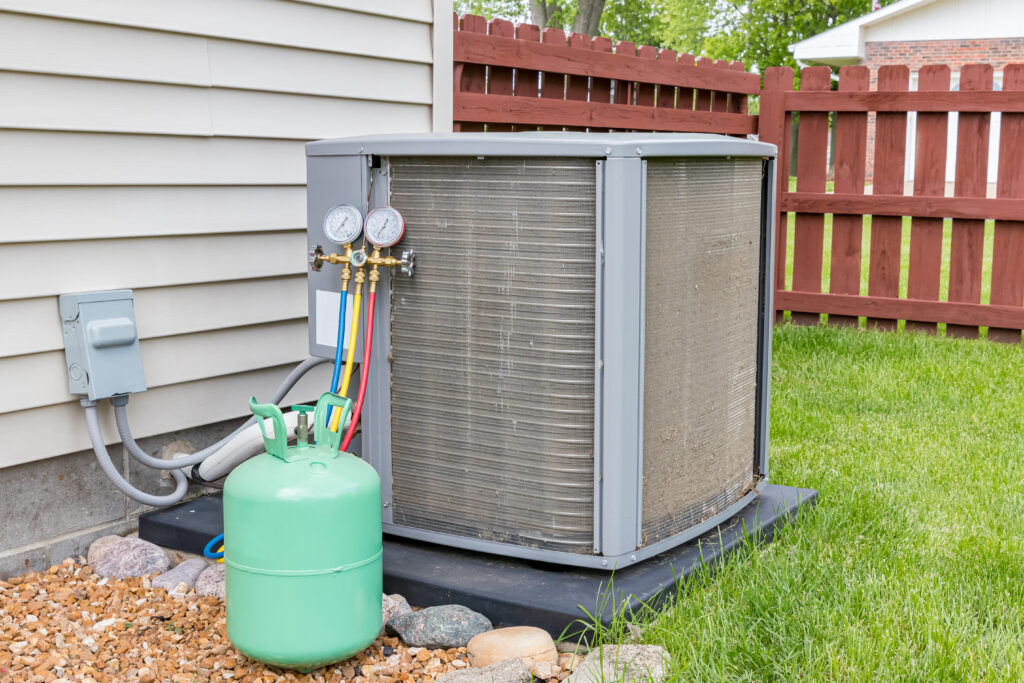
Low refrigerant is another common reason an air conditioner may freeze.
Contrary to a common misconception, an AC system doesn’t normally “use up” refrigerant. If the refrigerant level is low, there may be a leak somewhere in the system.
Low refrigerant can cause the pressure and temperature within the system to drop, potentially allowing ice to form on the evaporator coil.
Signs of a refrigerant problem may include:
- Ice on the indoor coil or refrigerant lines
- AC blowing warmer air
- Longer cooling cycles
- Reduced cooling performance
- Hissing sounds
- Increasing energy usage
Refrigerant issues should be diagnosed and handled by a qualified HVAC professional.
4. A Dirty Evaporator Coil
Over time, dust and debris can accumulate on the evaporator coil.
A dirty coil can restrict heat transfer and interfere with normal airflow. Under the right conditions, this can contribute to freezing.
Regular HVAC maintenance helps keep coils and other components clean and operating properly.
5. Blower Motor Problems
Your blower motor circulates conditioned air throughout your home.
If the motor isn’t operating correctly, airflow across the evaporator coil may be reduced.
A failing blower motor may also cause:
- Weak airflow from vents
- Unusual noises
- Inconsistent temperatures
- Longer cooling cycles
If your AC is freezing and airflow suddenly feels weaker than normal, the blower system should be inspected.
6. Thermostat Problems
A malfunctioning thermostat can sometimes cause an air conditioner to run longer than it should.
If the thermostat isn’t accurately sensing indoor temperature or communicating properly with the HVAC system, the AC may operate incorrectly.
Thermostat issues are usually relatively straightforward to diagnose, but they should be evaluated alongside the rest of the system.
7. Dirty or Blocked Outdoor Unit
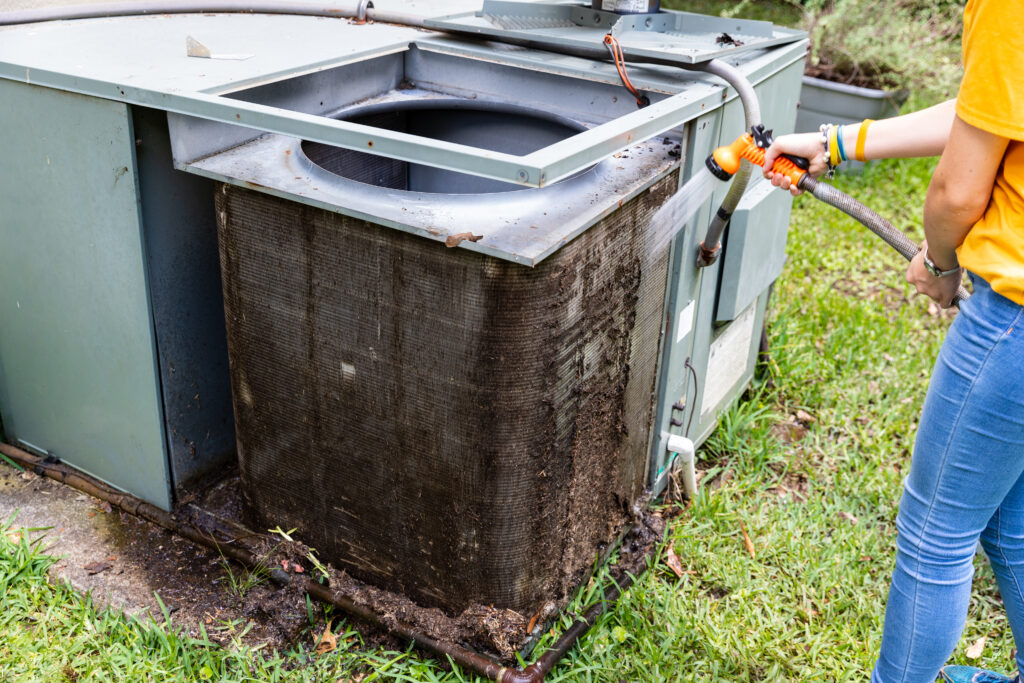
Your outdoor condenser needs adequate airflow to release heat.
Leaves, grass, dirt, and other debris can accumulate around the outdoor unit and restrict airflow.
Keep the area around your condenser clear and follow the manufacturer’s recommended clearance requirements.
If the outdoor coil is heavily dirty, professional cleaning may be appropriate.
What Should You Do If Your AC Is Frozen?
If you discover ice on your air conditioner, don’t keep running the system in an attempt to cool your home.
Instead:
1. Turn Off the Cooling
Turn the thermostat from cooling mode to off.
If your system has a fan-only setting, you may be able to use the fan to help circulate air, but don’t continue cooling while the coil is frozen.
2. Allow the Ice to Melt
Give the system time to completely thaw.
Depending on how much ice has accumulated, this can take several hours.
Don’t try to remove the ice with a sharp object. You could damage the coil or other components.
3. Check the Air Filter
Once you’ve turned the system off, check the filter.
If it’s dirty, replace it with the correct size and type recommended for your system.
4. Check Your Vents
Make sure supply vents and return-air registers aren’t blocked by furniture, rugs, curtains, or other objects.
5. Schedule Professional Service if the Problem Returns
If the AC freezes again after thawing—or if you notice poor cooling, weak airflow, or other problems—the underlying issue should be professionally diagnosed.
Repeated freezing isn’t normal and shouldn’t be treated as a temporary inconvenience.
Can You Run an AC That Keeps Freezing?
It’s best not to.
Continuing to operate a frozen system can increase stress on the compressor and other components. It may also prevent your AC from cooling effectively while increasing energy consumption.
Allow the system to thaw and determine why it’s freezing before returning it to normal operation.
How Can You Prevent Your AC From Freezing?
Regular maintenance can help reduce the likelihood of freezing problems.
Homeowners can:
- Replace air filters regularly
- Keep vents unobstructed
- Keep the outdoor condenser clear
- Schedule routine HVAC maintenance
- Address unusual noises promptly
- Pay attention to changes in airflow
- Have refrigerant problems professionally diagnosed
Preventative maintenance can help identify developing issues before they lead to a complete breakdown.
When Should You Call an HVAC Professional?
You should consider professional service if:
- Your AC repeatedly freezes
- Ice returns after the system thaws
- The system isn’t cooling properly
- Airflow is weak
- You suspect a refrigerant leak
- The blower isn’t operating properly
- Your energy bills have increased unexpectedly
- Your AC is more than 10–15 years old and experiencing repeated problems
A professional inspection can identify the underlying cause instead of simply treating the ice buildup.
AC Repair and Maintenance in South Jersey
Summer temperatures can put significant demand on air conditioning systems throughout South Jersey. A frozen AC can quickly turn into a major comfort problem if the underlying cause isn’t addressed.
Homeowners in:
- Hammonton
- Egg Harbor Township
- Tabernacle
- Folsom
- Mays Landing
- Atco
- Surrounding communities
can benefit from professional AC inspections, repairs, maintenance, and system replacement when necessary.
Final Thoughts

A frozen air conditioner is usually a warning sign that something isn’t operating correctly. Restricted airflow, dirty components, low refrigerant, blower problems, and other issues can all contribute to ice buildup.
Turning off the system, allowing it to thaw, checking the filter, and addressing the underlying problem can help prevent further damage and restore reliable cooling.
If your AC keeps freezing up or isn’t keeping your home comfortable, WYNNOW is here to help. We provide professional AC inspections, repairs, maintenance, and new system installations throughout South Jersey, helping homeowners keep their HVAC systems running reliably throughout the summer. Also please be sure to check us out on Facebook, Instagram and X if you found this blog helpful!