

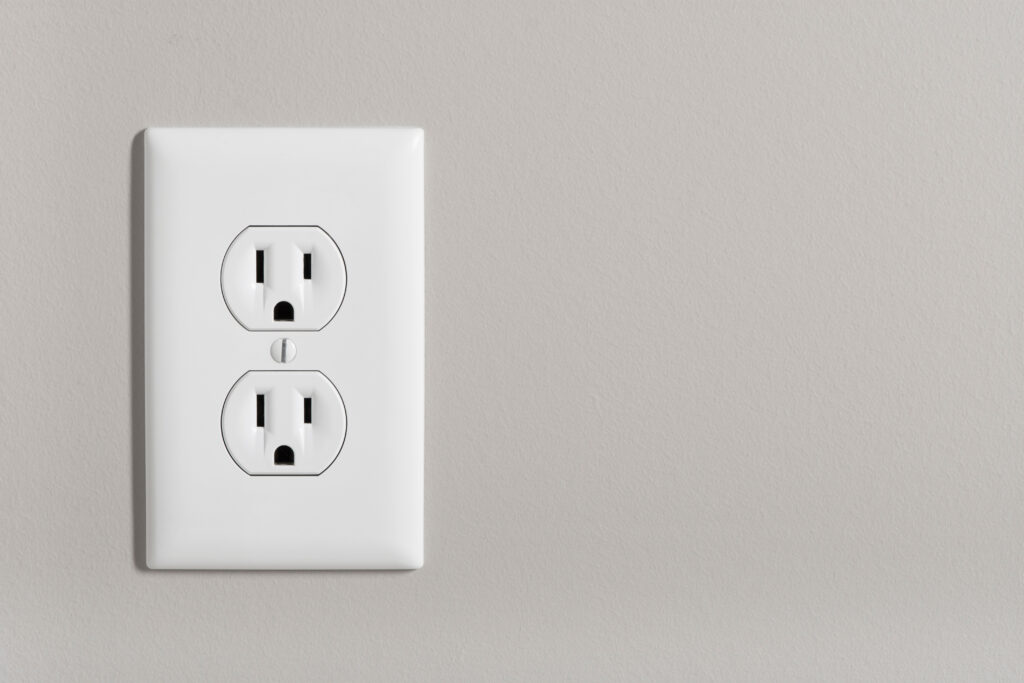
Electrical outlets are easy to overlook until you find yourself relying on extension cords, power strips, or crowded outlets throughout your home.
As modern households use more electronics and appliances than ever, having enough properly placed electrical outlets can make a home more convenient, organized, and safer. If you’re renovating, building an addition, or simply finding that your current outlets aren’t keeping up with your needs, it may be time to consider an electrical upgrade.
So, how many outlets does a home really need?
The answer depends on the size and layout of your home, how each room is used, and the appliances and electronics you regularly operate.
Why Having Enough Electrical Outlets Matters
A lack of outlets can lead homeowners to rely heavily on extension cords and power strips.
While these can be useful for temporary situations, they aren’t always a good long-term solution.
Too many devices connected to the same circuit can contribute to an overloaded electrical system. Extension cords can also create trip hazards or become damaged when placed under rugs, furniture, or in high-traffic areas.
Having appropriately located outlets gives you more flexibility while helping you use your electrical system as intended.
How Many Outlets Does Each Room Need?
There isn’t one universal number that works for every home. Different rooms have different electrical demands.
Here are some general considerations when evaluating your home’s outlets.
Living Room
A living room may need outlets for:
- Television
- Streaming devices
- Lamps
- Phone chargers
- Speakers
- Gaming systems
- Computers
- Vacuum cleaners
Consider outlets near entertainment centers, seating areas, and other locations where electronics are commonly used.
A room with a large entertainment setup may benefit from additional outlets behind or near the television rather than relying on power strips.
Kitchen
The kitchen typically requires more electrical outlets than many other rooms because it contains numerous appliances.
You may need power for:
- Coffee makers
- Toasters
- Blenders
- Microwaves
- Air fryers
- Mixers
- Refrigerators
- Dishwashers
- Garbage disposals
Kitchen countertop outlets should be positioned so appliances can be used without relying on long extension cords.
Some kitchen appliances also require dedicated circuits rather than simply adding another outlet to an existing circuit.
Because kitchens have specific electrical requirements, electrical work should be planned and installed according to applicable local codes.
Bedrooms
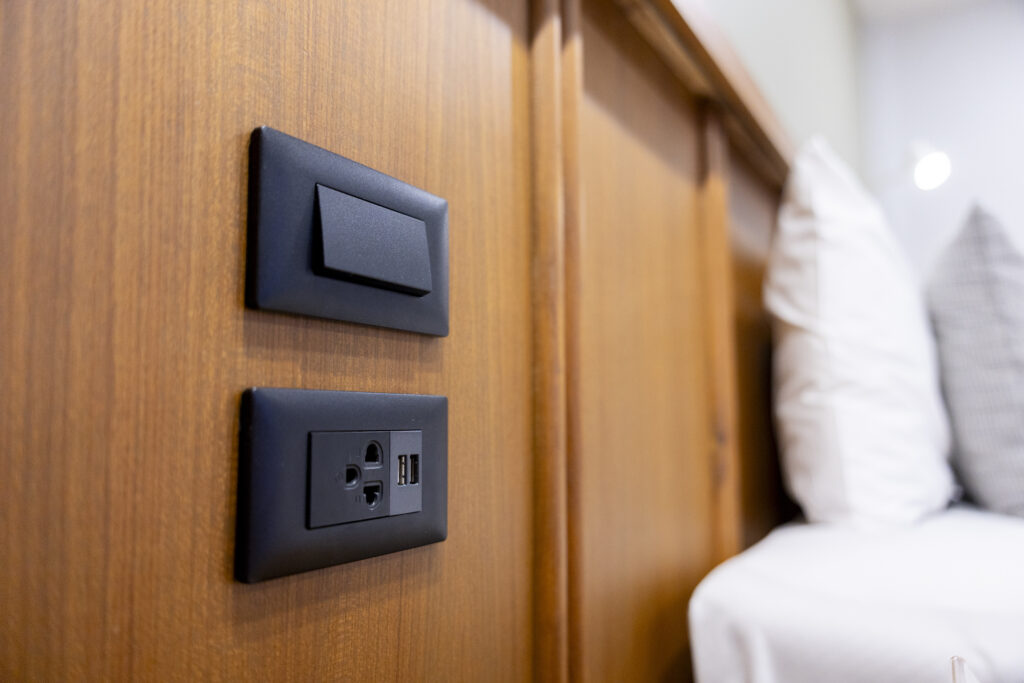
Bedrooms commonly need outlets for:
- Lamps
- Phone chargers
- Alarm clocks
- Televisions
- Computers
- Fans
- Other personal electronics
Outlets on both sides of the bed can be especially convenient.
If a bedroom doubles as a home office, additional outlets may be needed for computers, monitors, printers, and other equipment.
Home Office
Home offices can have surprisingly high electrical demands.
A typical workspace might include:
- Desktop computer
- Multiple monitors
- Printer
- Desk lamp
- Speakers
- Router
- Phone chargers
- Other electronics
If your office requires multiple power strips just to operate normally, additional outlets or circuit capacity may be worth considering.
Bathrooms
Bathrooms typically need outlets near sinks for items such as:
- Hair dryers
- Electric razors
- Electric toothbrushes
- Styling tools
Because bathrooms are wet locations, electrical outlets must meet specific safety requirements. Ground-fault circuit interrupter protection, commonly called GFCI protection, is required in many locations where electrical equipment may be exposed to water.
Electrical work in bathrooms should be performed with applicable safety and code requirements in mind.
Garage and Workshop
Garages often need more outlets than homeowners initially expect.
Power may be needed for:
- Power tools
- Lawn equipment
- Freezers
- Battery chargers
- Shop vacuums
- Workbenches
- Garage door openers
If you’re using several power tools, you may also need to consider whether the existing circuits can safely handle the electrical load.
Adding outlets without addressing circuit capacity doesn’t necessarily solve the problem.
Outdoor Areas
Outdoor outlets can be useful for:
- Lawn equipment
- String lights
- Pressure washers
- Outdoor entertainment
- Holiday decorations
- Pool equipment
- Landscaping projects
Exterior outlets need appropriate weather-resistant protection and GFCI protection where required.
Properly installed outdoor outlets can make seasonal projects much easier without relying on extension cords running through doors or windows.
Is There Such a Thing as Too Many Outlets?
Adding more outlets isn’t automatically a problem.
The bigger consideration is whether your electrical system has enough circuit capacity to safely support everything being plugged in.
For example, adding several outlets to a room doesn’t necessarily increase the amount of electricity the circuit can safely supply.
If you’re constantly tripping breakers, using multiple power strips, or running extension cords throughout your home, the issue may be more than a lack of outlets.
You may need additional circuits or an electrical panel upgrade.
Signs You May Need More Electrical Outlets
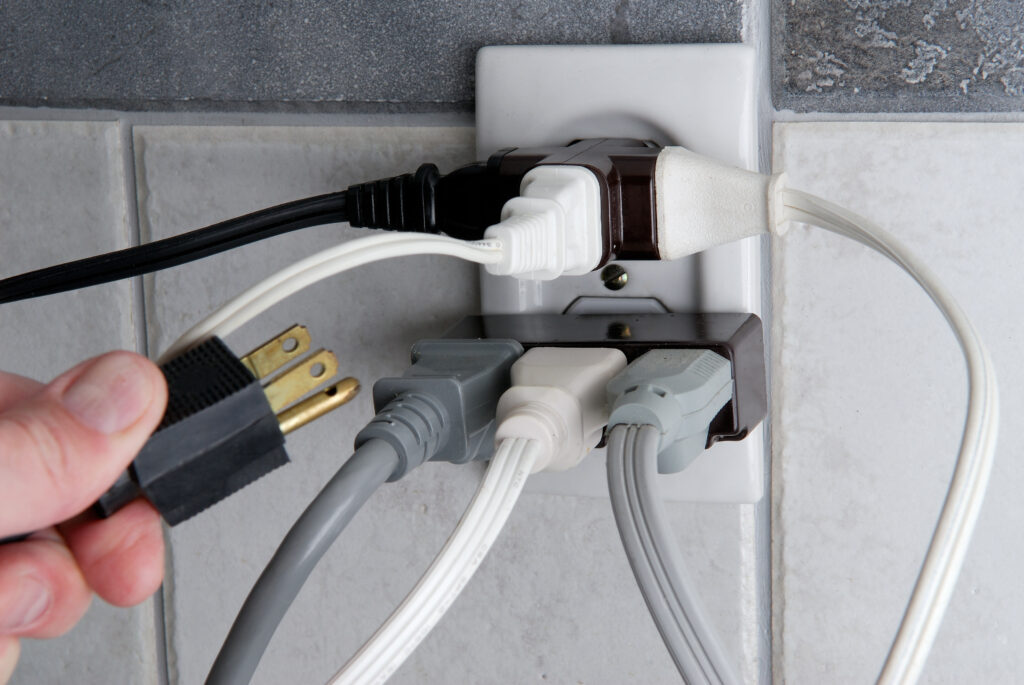
Your home may benefit from additional outlets if you frequently:
- Use extension cords
- Use multiple power strips
- Unplug one device to plug in another
- Have cords running across walkways
- Need outlets far from where electronics are used
- Have an older home with limited outlets
- Are converting a room into a home office
- Are adding new appliances or equipment
These are signs that your home’s electrical layout may no longer match how you use the space.
When Should You Add New Circuits?
Sometimes the solution isn’t simply adding an outlet to an existing circuit.
A new circuit may be appropriate when you’re installing equipment with significant electrical demand, such as:
- Large kitchen appliances
- Workshop equipment
- HVAC equipment
- Electric vehicle charging equipment
- Additional laundry equipment
- Home additions
- Certain heating systems
A qualified electrician can evaluate your existing panel and determine whether the available electrical capacity is sufficient.
What About Older Homes?
Older homes may have fewer outlets and electrical circuits than modern households need.
If your home has an older electrical system, you may notice:
- Limited outlets
- Frequent breaker trips
- Flickering lights
- Warm outlets or switches
- Outdated wiring
- Extension cords used throughout the home
In some cases, adding a few outlets may be enough. In others, the home’s wiring, circuits, or electrical panel may need to be upgraded.
An electrical inspection can help determine what improvements make sense.
Planning Outlets During a Home Renovation
A renovation is one of the best times to evaluate your electrical layout.
Walls may already be open, making it easier to run new wiring and install additional outlets.
Before starting a renovation, think about where you’ll use:
- Furniture
- Televisions
- Computers
- Appliances
- Lighting
- Charging stations
- Home entertainment equipment
Planning outlets around how you actually use the room can make the finished space much more functional.
Don’t Forget USB and Modern Charging Needs
Today’s homes often need convenient charging locations for phones, tablets, laptops, watches, and other devices.
USB-equipped outlets or dedicated charging areas can reduce clutter and make everyday charging more convenient.
However, these should still be installed properly and connected to appropriate circuits.
Should You Install the Outlets Yourself?
Replacing or adding electrical outlets may seem like a simple DIY project, but electrical work can create serious safety hazards when wiring is incorrect.
Problems can include:
- Electric shock
- Short circuits
- Electrical fires
- Damaged equipment
- Code violations
If you’re adding new outlets, circuits, or wiring, professional electrical installation can help ensure the work is performed safely and according to applicable requirements.
Electrical Services for South Jersey Homeowners
If your home doesn’t have enough outlets for the way you live today, you don’t necessarily have to rely on extension cords and power strips.
Professional electrical services can help homeowners evaluate their current systems and determine whether they need additional outlets, circuits, wiring improvements, or a larger electrical upgrade.
Homeowners throughout South Jersey, including areas such as:
- Hammonton
- Egg Harbor Township
- Galloway
- Berlin
- Mays Landing
- Waterford
- Surrounding communities
can benefit from professional electrical inspections, outlet installation, circuit additions, panel upgrades, and electrical renovations.
Final Thoughts

There isn’t a single number of electrical outlets that every home needs. The right amount depends on the size of your home, the purpose of each room, and the appliances and electronics you use every day.
If you’re constantly reaching for extension cords or power strips, it may be time to rethink your electrical layout. And if you’re adding multiple outlets or high-demand equipment, it’s important to consider your home’s overall circuit capacity—not just the number of receptacles.
If your home needs additional outlets, new circuits, or other electrical improvements, WYNNOW is here to help. We provide professional electrical inspections, outlet installation, repairs, upgrades, and renovation services throughout South Jersey to help homeowners create safer, more convenient electrical systems. Also if you found this blog informative, please be sure to check us out on Facebook, Instagram and X!