

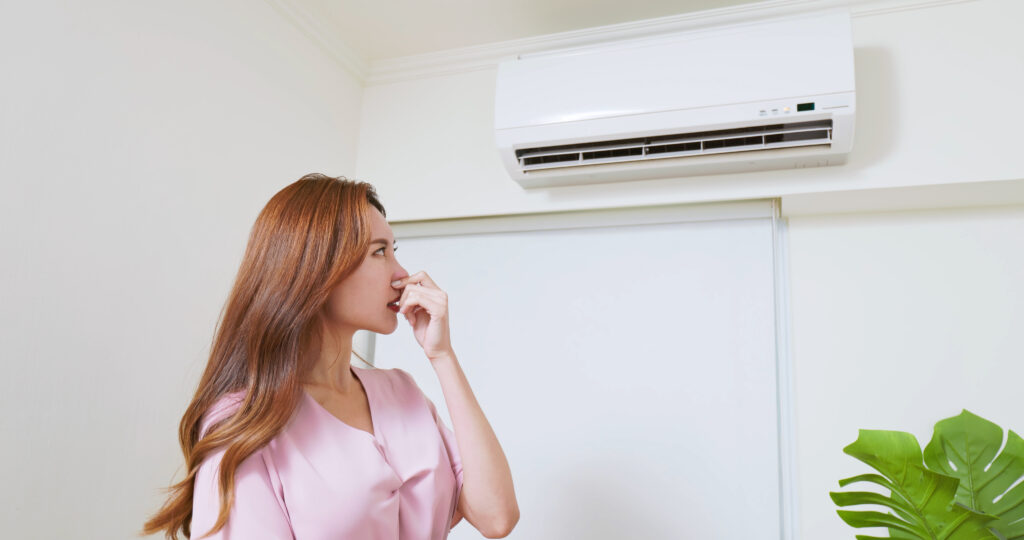
If your air conditioner starts producing an unpleasant smell, it’s usually a sign that something needs attention. While some odors may come from a dirty filter or moisture buildup, other smells can indicate problems with your HVAC system that shouldn’t be ignored.
During a hot New Jersey summer, your AC may run for hours each day, making unusual odors especially noticeable. Understanding what different smells can mean can help you determine when a simple maintenance task may be enough and when professional AC service is needed.
Why Does My AC Smell Bad?
There isn’t just one cause of a bad-smelling air conditioner. Common causes include:
- Dirty air filters
- Mold or mildew growth
- Moisture buildup
- Dirty evaporator coils
- Clogged condensate drains
- Electrical problems
- Dead pests or debris
- Aging ductwork
The type of smell can also provide clues about the underlying problem.
1. Musty or Moldy Smell
A musty smell is one of the most common odors homeowners notice from an AC system.
It may be caused by moisture accumulating inside:
- Evaporator coils
- Drain pans
- Ductwork
- Air handlers
- Condensate lines
Because air conditioning systems naturally remove moisture from the air, excessive moisture or poor drainage can create conditions where mold and mildew develop.
What can help?
Replacing a dirty filter and keeping the system properly maintained can help. However, if the musty odor continues, a professional HVAC inspection can help locate the source of the moisture.
2. Dirty or “Dusty” Smell
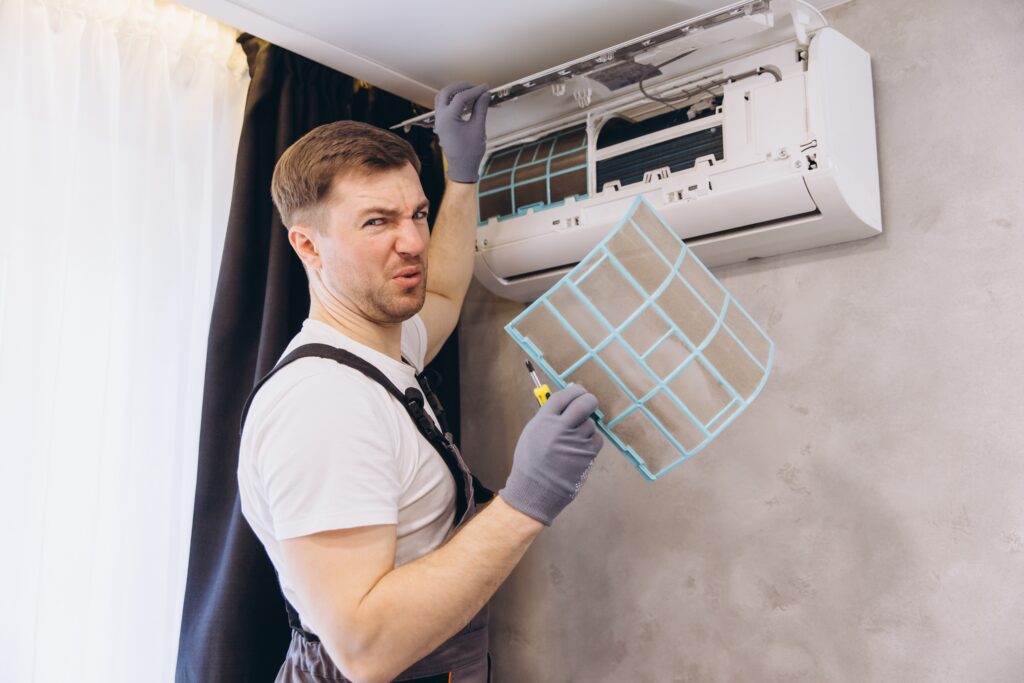
If your AC smells dusty when it first turns on, the cause may be a dirty air filter or accumulated dust inside the system.
This can be especially noticeable when the system hasn’t been used for an extended period.
Check your filter and replace it if necessary.
If the odor continues after changing the filter, there may be dust buildup elsewhere in the HVAC system that needs to be addressed.
3. Rotten Egg or Sewage Smell
A strong rotten egg or sewage-like odor shouldn’t be ignored.
Possible causes include:
- A plumbing issue near the HVAC system
- A dry drain trap
- Sewer gas entering the home
- Organic material inside ductwork
- A dead pest
If the smell is persistent or particularly strong, professional inspection is recommended to identify the source.
Don’t assume the odor is coming from the AC simply because you notice it when the system is running.
4. Burning or Electrical Smell
A burning odor requires more immediate attention.
It could be caused by:
- Overheated wiring
- A failing electrical component
- A motor problem
- Excessive dust on components
- An electrical fault
If you smell burning plastic or an electrical odor coming from your HVAC system, turn the system off and contact a qualified HVAC or electrical professional.
Do not continue running the equipment while investigating a potential electrical problem.
5. Rotten or Dead Animal Smell
Sometimes an unpleasant AC odor isn’t caused by the equipment itself.
Small animals or insects can enter outdoor equipment or ductwork and become trapped.
A dead pest can create a strong odor that becomes more noticeable when your HVAC system circulates air.
If you suspect something has entered the system, professional inspection can help locate and safely address the problem.
6. Dirty Evaporator Coils
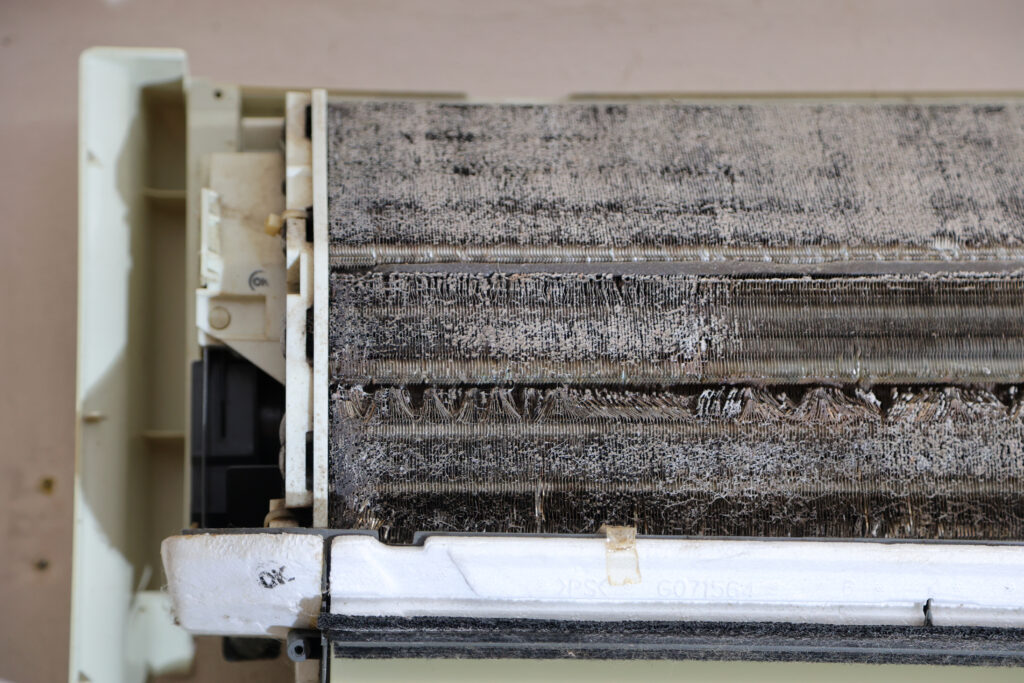
Your evaporator coil plays an important role in cooling your home and removing moisture from the air.
Over time, dirt and debris can accumulate on the coil, potentially contributing to unpleasant odors and reduced system performance.
Regular HVAC maintenance can help keep coils clean and operating properly.
7. A Clogged Condensate Drain
Your air conditioner produces condensation while operating.
That moisture normally drains away through a condensate line.
If the drain becomes clogged, water may accumulate inside the system, creating conditions that contribute to:
- Musty odors
- Mold or mildew growth
- Water leaks
- Reduced system performance
A clogged condensate drain should be addressed before it causes additional problems.
What Should You Do If Your AC Smells Bad?
Start by identifying what the odor smells like and when you notice it.
Check the Air Filter
A dirty filter is one of the simplest potential causes.
Replace the filter if it’s dirty or according to your manufacturer’s recommended schedule.
Check for Visible Moisture
Look around the indoor HVAC equipment for:
- Standing water
- Water stains
- Excess condensation
- Leaking drain pans
Visible moisture can indicate a drainage problem.
Make Sure the Outdoor Unit Is Clear
Remove leaves, grass, and debris from around the outdoor condenser.
Don’t attempt to take apart electrical or refrigerant components yourself.
Pay Attention to When the Smell Occurs
Does the odor:
- Appear only when the AC starts?
- Continue throughout the cooling cycle?
- Come from one particular vent?
- Occur even when the AC isn’t running?
These details can help an HVAC professional determine where to begin troubleshooting.
When Should You Call an HVAC Professional?
Some odors can be resolved with basic maintenance, but certain smells warrant professional attention.
Contact an HVAC professional if:
- The smell continues after replacing the filter
- You notice mold or excessive moisture
- Your AC is leaking water
- The system isn’t cooling properly
- You smell burning or electrical odors
- The odor returns repeatedly
- Your system is experiencing frequent breakdowns
A professional can inspect the system and identify the source instead of simply masking the smell.
Can Regular AC Maintenance Prevent Bad Odors?
Regular maintenance can help reduce the likelihood of many odor-related problems.
Professional maintenance may include inspecting and cleaning:
- Evaporator coils
- Condensate drains
- Drain pans
- Filters
- Blower components
- Electrical connections
- Other HVAC components
Keeping the system clean and properly maintained can also help improve airflow and overall performance.
AC Services in South Jersey
New Jersey’s summer heat and humidity can put significant demand on residential air conditioning systems. If your AC develops an unusual smell, addressing the problem early can help protect your system and keep your home comfortable.
Homeowners in:
- Hammonton
- Tabernacle
- Buena
- Sicklerville
- Estell Manor
- Atco
- Surrounding communities
can benefit from professional AC inspections, repairs, maintenance, and system replacement when needed.
Final Thoughts

A bad smell coming from your air conditioner isn’t something you should simply cover up with air fresheners. The odor may be caused by something simple, such as a dirty filter, but it can also point to moisture buildup, clogged drainage, electrical problems, or another issue that requires professional attention.
If your AC smells bad or isn’t operating the way it should, WYNNOW is here to help. We provide professional AC inspections, repairs, maintenance, and new system installations throughout South Jersey, helping homeowners keep their homes comfortable and their HVAC systems running reliably all summer long. Also if you found this blog informative, please be sure to check us out on Facebook, Instagram and X!