

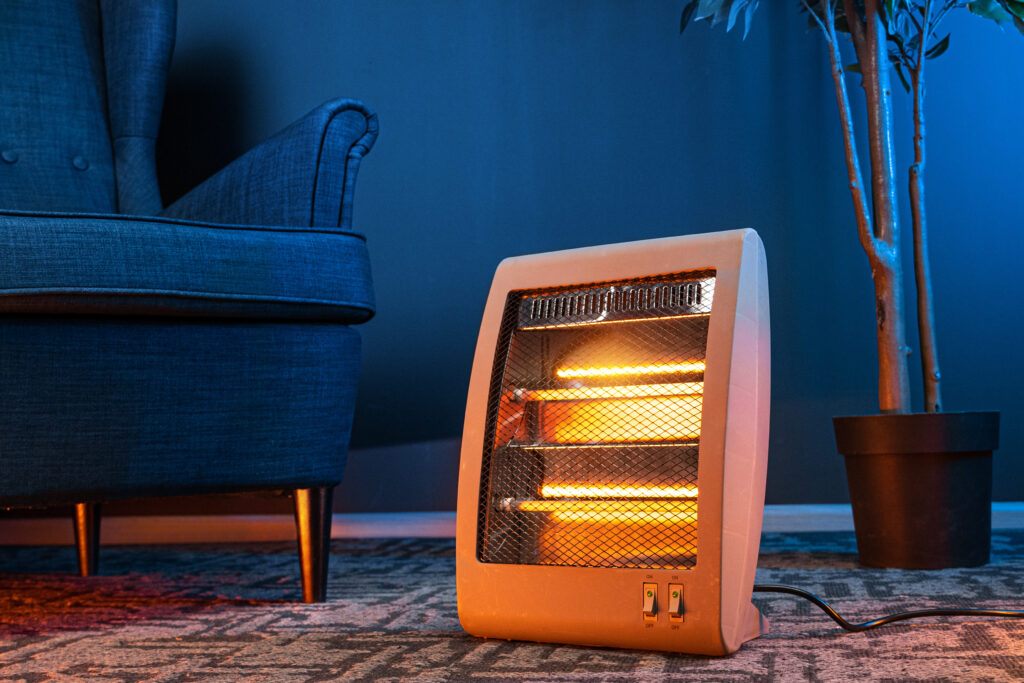
When temperatures drop, space heaters can be a convenient way to warm up a chilly room. They’re commonly used in bedrooms, offices, basements, garages, and other areas where extra heat is needed. But if the nearest outlet isn’t in the right spot, you may be tempted to plug your space heater into an extension cord.
In most cases, you should not plug a space heater into an extension cord or power strip. Many portable space heaters draw a significant amount of electricity, and extension cords can overheat when they carry more current than they are designed to handle. This can increase the risk of electrical fires, damaged equipment, and other hazards.
The safest option is to plug a space heater directly into a properly rated wall outlet, following the manufacturer’s instructions.
In this guide, we’ll explain why extension cords can be dangerous with space heaters, what electrical safety precautions to follow, and how to keep your home warm without creating unnecessary risks.
Why Are Extension Cords Dangerous for Space Heaters?
Space heaters use electricity to generate heat. Many common portable heaters operate at 1,500 watts, which can draw approximately 12.5 amps on a 120-volt circuit.
That is a substantial electrical load for a household outlet and circuit. When a space heater is connected through an extension cord, the cord must carry that current continuously while the heater operates.
If the cord is undersized, damaged, coiled, or poorly connected, it can overheat.
Potential hazards include:
- Overheating: Electrical resistance can cause a cord to become hot, especially when it carries a heavy load.
- Fire risk: Excessive heat can damage cord insulation or ignite nearby materials.
- Loose connections: Poor connections at plugs or receptacles can create additional heat.
- Voltage drop: A long or undersized cord can reduce the voltage reaching the heater and increase electrical stress.
- Tripping breakers: A space heater may overload a circuit that already supplies other appliances.
Even if an extension cord appears to work normally, that doesn’t mean it is safe for continuous use with a high-wattage heater.
How Much Electricity Does a Space Heater Use?
Most portable electric space heaters use between 750 and 1,500 watts, depending on their size, design, and heat setting.
A typical 1,500-watt space heater draws approximately 12.5 amps when operating on a standard 120-volt household circuit. This is a significant electrical load, especially when other appliances are connected to the same circuit.
For example, running a space heater while using a microwave, hair dryer, or other high-powered appliance may overload the circuit and cause the breaker to trip.
Before using a space heater, check the wattage listed on its label and make sure the electrical circuit can safely support the load. Avoid plugging multiple high-powered appliances into the same outlet or circuit.
If your breaker repeatedly trips while using a space heater, stop using it and contact a licensed electrician to determine whether the circuit is overloaded or has an electrical problem.
Can You Use a Heavy-Duty Extension Cord With a Space Heater?
A heavy-duty extension cord may have a higher current rating than a standard household cord, but that does not automatically make it safe for use with a space heater.
The heater manufacturer’s instructions are the most important source of guidance. Many manufacturers specifically prohibit using extension cords or power strips.
If the instructions state that an extension cord must not be used, do not use one—even if the cord is marketed as heavy-duty.
If the manufacturer explicitly permits a cord, it must be suitable for the heater’s electrical load and use conditions. Factors include:
- Wire gauge
- Cord length
- Current and wattage rating
- Plug and receptacle condition
- Indoor or outdoor rating
- Whether the cord is approved for continuous use
- Whether the cord can remain fully uncoiled and unobstructed
Do not use a household extension cord simply because it fits the heater’s plug.
The safest recommendation remains to plug the space heater directly into a wall outlet.
Why You Should Never Plug a Space Heater Into a Power Strip
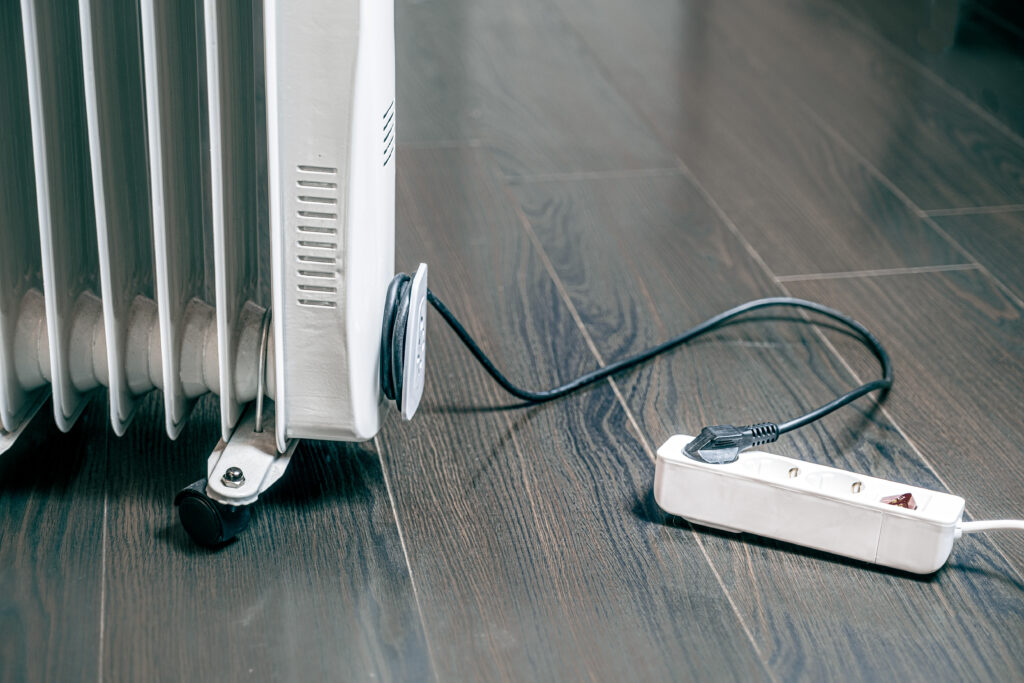
Power strips are generally designed for multiple lower-power electronic devices, such as computers, chargers, and small office equipment.
A space heater can draw much more current than many of these devices. Connecting a heater to a power strip can overload the strip, causing it to overheat or fail.
Avoid plugging a space heater into:
- Standard power strips
- Surge protectors
- Multi-outlet adapters
- Smart plugs unless explicitly approved by the heater manufacturer and rated for the load
- Another extension cord or a daisy-chained power strip
Some power strips have built-in circuit breakers, but that does not make them appropriate for space heaters. A breaker may not prevent all overheating hazards, particularly at loose or damaged connections.
What Is the Safest Way to Plug In a Space Heater?
To reduce electrical and fire risks, follow these precautions whenever you use a portable space heater.
1. Plug it directly into a wall outlet
Use a properly installed wall receptacle that is in good condition. Avoid extension cords, power strips, and multi-outlet adapters unless the heater’s instructions specifically permit an approved setup.
2. Check the outlet before using the heater
The outlet should not be loose, damaged, discolored, or unusually warm.
If the plug does not fit securely, the receptacle may need repair or replacement. A loose electrical connection can generate heat and create a fire hazard.
3. Avoid overloading the circuit
A space heater can use a large portion of the available capacity on a household circuit.
Avoid operating it on the same circuit as other high-wattage appliances, such as:
- Hair dryers
- Microwaves
- Portable air conditioners
- Toasters
- Other space heaters
If a circuit breaker trips repeatedly while using a heater, don’t keep resetting it. The circuit may be overloaded or have another electrical problem that needs to be addressed.
4. Keep the heater away from combustible materials
Place the heater on a stable, level surface and maintain at least 3 feet of clearance from items that can burn, unless the manufacturer’s instructions require a greater distance.
Keep it away from:
- Curtains and blinds
- Bedding and blankets
- Furniture
- Paper and cardboard
- Clothing
- Upholstered furniture
Never place clothing or towels over a space heater to dry them.
5. Never leave a space heater unattended
Turn off the heater when leaving the room or going to sleep, unless the specific heater is designed and approved for that use and its instructions permit it.
Keep children and pets away from the heater, and avoid placing it where someone could trip over it or accidentally knock it over.
6. Use a heater with appropriate safety features
Look for a space heater that is listed by a recognized testing laboratory, such as UL or ETL, and has safety features appropriate to its design.
Useful features may include:
- Tip-over protection
- Overheat protection
- A thermostat
- A sturdy base
- A protective grille
Safety features help reduce risk, but they do not replace proper placement, electrical setup, and supervision.
What Should You Do If Your Space Heater Keeps Tripping the Breaker?
If your space heater causes a circuit breaker to trip, it may be drawing more electricity than the circuit can safely supply.
This can happen when the heater is sharing a circuit with other appliances or when there is an electrical issue.
Common reasons a breaker trips
Circuit overload: The heater and other devices are drawing more current than the circuit can handle.
Faulty heater: A damaged heating element, cord, or internal component may be causing an electrical problem.
Damaged outlet or wiring: A loose connection or wiring issue can cause unsafe operating conditions.
Incorrect circuit protection: The circuit may not be suitable for the electrical load being used.
What to do
- Turn off the heater.
- Unplug it if the plug and outlet are safe to touch.
- Check whether other appliances are operating on the same circuit.
- Avoid repeatedly resetting a tripped breaker.
- Stop using the heater if you notice burning smells, sparks, unusual sounds, or heat around the plug or outlet.
If the breaker continues tripping, have a licensed electrician inspect the circuit and determine whether the heater, outlet, or wiring needs repair.
Never replace a breaker with one that has a higher amperage rating unless a qualified electrician determines that the wiring and circuit are designed for it.
Warning Signs of an Electrical Problem
Space heaters should be used carefully because electrical problems can develop without much warning.
Stop using the heater and arrange for an electrical inspection if you notice:
- A burning plastic or rubber smell
- A hot plug or receptacle
- Discoloration around an outlet
- Buzzing, crackling, or popping sounds
- Sparks when plugging in or operating the heater
- Repeatedly tripping breakers
- A damaged power cord
- Flickering lights when the heater turns on
If you see smoke or flames, leave the area and call 911. Do not attempt to handle an electrical fire with water.
If an outlet is hot, smoking, or sparking, do not touch it. Turn off the circuit at the breaker only if you can do so safely without approaching the hazard.
Is It Safe to Use a Space Heater in a Bedroom?
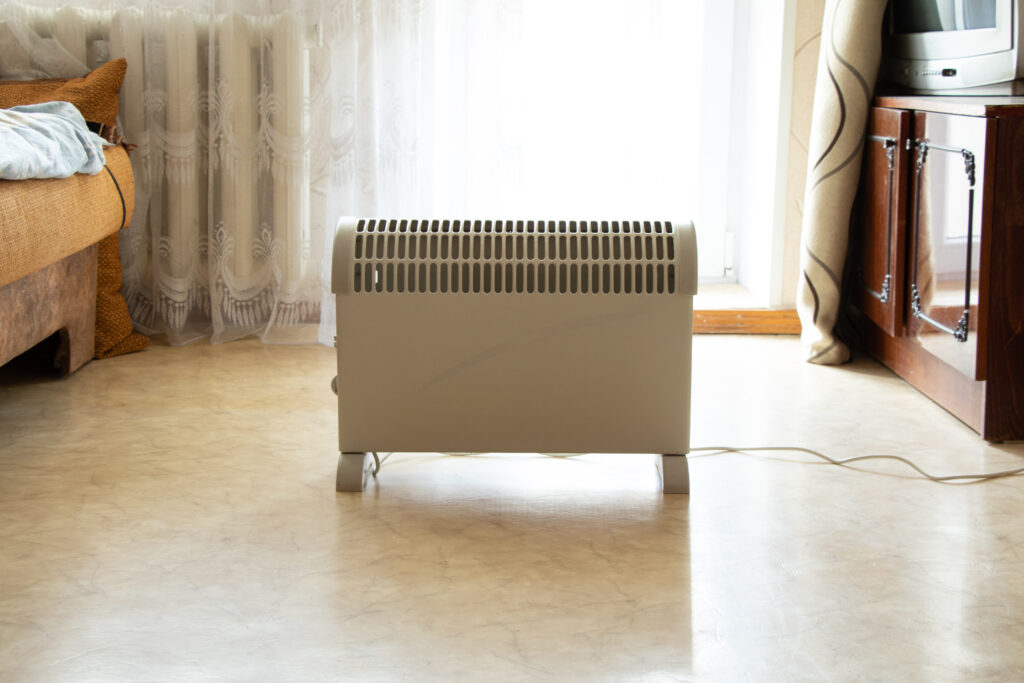
Space heaters can be used in bedrooms only when the specific heater is suitable for that environment and the manufacturer’s instructions are followed.
However, using a space heater while sleeping creates additional risks because you may not notice a developing problem.
For safer use:
- Keep the heater at least 3 feet from bedding, curtains, and furniture.
- Place it on a flat, stable surface.
- Keep the heater and cord away from walkways.
- Never use it under a blanket or near clothing.
- Avoid using extension cords or power strips.
- Turn it off before going to sleep unless the manufacturer explicitly allows unattended operation.
- Make sure smoke alarms are working properly.
If a bedroom is consistently too cold, it may be worth investigating drafts, insulation, heating system performance, or airflow rather than relying on a portable heater every night.
How to Keep Your Home Warm Without Overusing a Space Heater
Space heaters can provide temporary supplemental heat, but they should not be the only solution for a room that remains cold.
If you find yourself relying on a portable heater frequently, consider ways to improve your home’s heating efficiency.
Check your heating system
A dirty air filter, blocked vents, thermostat issue, or malfunctioning heating equipment can prevent your home from warming properly.
If your furnace or heat pump isn’t providing adequate heat, have it inspected before the problem worsens.
Seal drafts
Cold air entering through windows, doors, and utility openings can make rooms feel colder than they should.
Weatherstripping and appropriate air sealing can help reduce heat loss.
Improve insulation
Insufficient insulation in walls, attics, and floors can contribute to uneven indoor temperatures. Addressing insulation problems can help improve comfort and reduce heating demand.
Keep vents clear
Make sure supply and return vents are not blocked by furniture, rugs, or other objects. Proper airflow helps your heating system distribute warmth throughout the home.
Use window coverings effectively
Closing curtains or blinds at night can help reduce heat loss through windows. During sunny winter days, opening them may allow sunlight to warm rooms naturally.
Do Space Heaters Increase Your Electric Bill?
Yes. Space heaters can increase electricity costs, especially when they operate for long periods.
The cost depends on the heater’s wattage, how many hours it runs, and your electricity rate.
For example, a typical 1,500-watt space heater running at full power for five hours uses approximately 7.5 kilowatt-hours of electricity. The actual cost depends on the price you pay per kilowatt-hour.
Using a space heater to warm a small, occupied room may be practical in some situations, but running multiple heaters or using one continuously can become expensive.
If your home needs supplemental heat every day, improving insulation or addressing a heating system problem may provide a more effective long-term solution.
Electrical Safety Tips for Winter
Cold weather often brings increased electrical demand from heating equipment, holiday decorations, and other household appliances.
Follow these precautions to help reduce electrical hazards during winter:
- Inspect space heater cords and plugs before use.
- Avoid extension cords and power strips for space heaters.
- Keep heaters away from combustible materials.
- Do not overload outlets or circuits.
- Use holiday lights according to their instructions.
- Replace damaged cords and plugs.
- Keep electrical equipment away from water.
- Avoid running cords beneath rugs or furniture.
- Make sure smoke alarms are working.
- Contact an electrician if you notice recurring electrical problems.
Electrical safety is especially important during winter, when heating equipment may be operating for longer periods.
When Should You Call an Electrician?
If your space heater causes repeated electrical problems, it’s important to determine whether the issue is with the heater, outlet, circuit, or wiring.
Contact a licensed electrician if:
- A breaker repeatedly trips when using a space heater.
- An outlet feels hot or appears discolored.
- You hear buzzing or crackling from a receptacle.
- You notice sparks or burning odors.
- The outlet is loose or damaged.
- You need a properly located outlet for supplemental heating.
- Your home has older wiring and you are unsure whether it can support the electrical load.
An electrician can inspect the circuit, evaluate the outlet, and determine whether repairs or additional electrical work are necessary.
If you need a new outlet installed, don’t assume that simply adding another receptacle will solve an overloaded circuit. The circuit’s wiring and capacity must be evaluated first.
Space Heater Safety for South Jersey Homeowners
Winter temperatures in South Jersey can make supplemental heating appealing, particularly in rooms that feel colder than the rest of the home.
Homeowners in Hammonton, Atco, Berlin, Sicklerville, and Mays Landing may use space heaters in bedrooms, basements, home offices, or other areas during cold spells.
However, a room that consistently needs a space heater may have an underlying issue, such as poor insulation, drafts, blocked airflow, or a heating system that isn’t distributing warmth properly.
For rental properties and commercial spaces, make sure space heaters are used according to manufacturer instructions and any applicable building, fire, or workplace requirements.
Whether you’re addressing an electrical concern or improving your home’s heating performance, taking the time to evaluate the problem can help keep your property safer and more comfortable throughout winter.
Frequently Asked Questions About Space Heater Extension Cords
Can I plug a 1,500-watt space heater into an extension cord?
You generally should not. Many 1,500-watt heaters draw approximately 12.5 amps on a 120-volt circuit. This is a substantial load, and many heater manufacturers prohibit extension cord use. Follow the heater’s instructions and plug it directly into a properly rated wall outlet.
Can I use a heavy-duty extension cord with a space heater?
Only if the heater manufacturer explicitly permits it and specifies a suitable cord. A heavy-duty label alone does not guarantee that the cord is appropriate for the heater or safe for continuous use.
Can I plug a space heater into a surge protector?
No, unless the heater’s manufacturer specifically approves that setup. Most surge protectors and power strips are not designed for the sustained high electrical load of a space heater.
Why does my space heater keep tripping the breaker?
The heater may be sharing a circuit with other appliances, the circuit may be overloaded, or the heater or wiring may have a fault. Stop using the heater and contact an electrician if the breaker continues tripping.
Is it safe to leave a space heater on overnight?
It is generally safer to turn off a portable space heater before sleeping. Follow the manufacturer’s instructions and use only a heater specifically approved for the intended use. Keep it away from bedding, curtains, and other combustible materials.
How far should a space heater be from furniture?
Maintain at least 3 feet of clearance from combustible materials unless the manufacturer’s instructions require a greater distance.
Can a space heater cause an electrical fire?
Yes. An overloaded circuit, damaged cord, loose connection, or improper use can create overheating and fire hazards. Proper electrical setup and safe placement are essential.
What should I do if my space heater smells like burning plastic?
Turn it off and stop using it. If the plug or outlet is hot, smoking, or sparking, do not touch it. If there is smoke or fire, leave the area and call 911. A burning plastic smell may indicate an electrical problem that needs professional attention.
Final Thoughts

Space heaters can provide convenient supplemental warmth during winter, but they draw a significant amount of electricity and must be used carefully.
In most cases, you should not plug a space heater into an extension cord or power strip. Plug it directly into a properly rated wall outlet, follow the manufacturer’s instructions, keep it away from combustible materials, and avoid overloading electrical circuits.
If your space heater repeatedly trips a breaker, your outlets become warm, or you notice unusual electrical odors or sounds, stop using the equipment and have the problem inspected.
If your home needs extra heat regularly, it may be time to investigate your heating system, insulation, or electrical setup.
Whether you need help with electrical safety, heating repairs, or winter home maintenance, WYNNOW is here to help you manage your home service needs throughout South Jersey. Also if you found this blog helpful, also please be sure to check us out on Facebook, Instagram and X for more.