


When summer temperatures rise in New Jersey, your air conditioner can become one of the largest sources of electricity use in your home. If you’ve noticed your electric bill climbing during the cooling season, you may be wondering exactly how much power your AC system uses and what you can do to improve its efficiency.
The amount of electricity an air conditioner consumes depends on several factors, including the size and efficiency of the system, how often it runs, the temperature outside, and the condition of your home.
Here’s what homeowners should know.
How Much Electricity Does a Central AC Use?
A typical central air conditioning system may use roughly 1,500 to 5,000 watts while operating, depending on the system’s size and efficiency.
For example, a larger or older system may require more electricity to produce the same amount of cooling as a newer, high-efficiency system.
Actual energy consumption varies significantly from home to home, so your system’s specifications and operating conditions are the best indicators of its electricity use.
What Determines How Much Power Your AC Uses?
Several factors influence your air conditioner’s energy consumption.
1. System Size
Larger AC systems generally require more electricity when running.
However, bigger isn’t always better. An air conditioner should be properly sized for your home. An oversized system may cycle too frequently, while an undersized system may run for extended periods trying to reach the desired temperature.
Proper sizing can improve both comfort and efficiency.
2. Energy Efficiency
Modern air conditioners are designed to operate more efficiently than many older systems.
When comparing systems, homeowners may see efficiency ratings such as SEER2. A higher efficiency rating generally means the system can provide cooling with less electricity under standardized testing conditions.
If you have an older AC system, upgrading to a modern high-efficiency unit may help reduce cooling-related energy consumption.
3. How Long Your AC Runs
The longer your AC system operates, the more power it uses.
During particularly hot New Jersey summer days, your AC may run for extended periods to maintain your thermostat setting.
Factors that can increase runtime include:
- High outdoor temperatures
- Poor insulation
- Air leaks
- Dirty filters
- Blocked airflow
- Incorrect system sizing
- Aging equipment
4. Your Thermostat Setting

The temperature you choose can also affect how frequently your AC runs.
Setting your thermostat several degrees higher when you’re away or sleeping can reduce cooling demand. A programmable or smart thermostat can make these adjustments automatically.
5. Home’s Insulation
Your AC doesn’t operate in isolation. Your home’s insulation, windows, doors, and air sealing all affect how hard your system has to work.
A well-insulated home can help keep conditioned air inside and outdoor heat outside, potentially reducing the amount of time your AC needs to run.
Does an Older AC Use More Electricity?
It can.
As air conditioners age, components can wear down and efficiency can decline. An older system may need to run longer to provide the same amount of cooling that a newer system can deliver more efficiently.
Signs your aging AC may be using more energy than necessary include:
- Increasing summer electric bills
- Longer cooling cycles
- Uneven temperatures
- Frequent repairs
- Reduced airflow
- Difficulty maintaining your thermostat setting
If you’re experiencing several of these issues, an HVAC professional can evaluate the system’s condition and efficiency.
How Can You Reduce AC Electricity Use?
You don’t necessarily need to replace your AC to improve efficiency.
Try these steps first:
Replace Your Air Filter
A dirty filter can restrict airflow and make your system work harder.
Check your filter regularly and replace it according to the manufacturer’s recommendations.
Keep the Outdoor Unit Clear
Remove leaves, grass, branches, and other debris from around your outdoor condenser.
Adequate clearance allows the system to move air more effectively.
Schedule Regular Maintenance
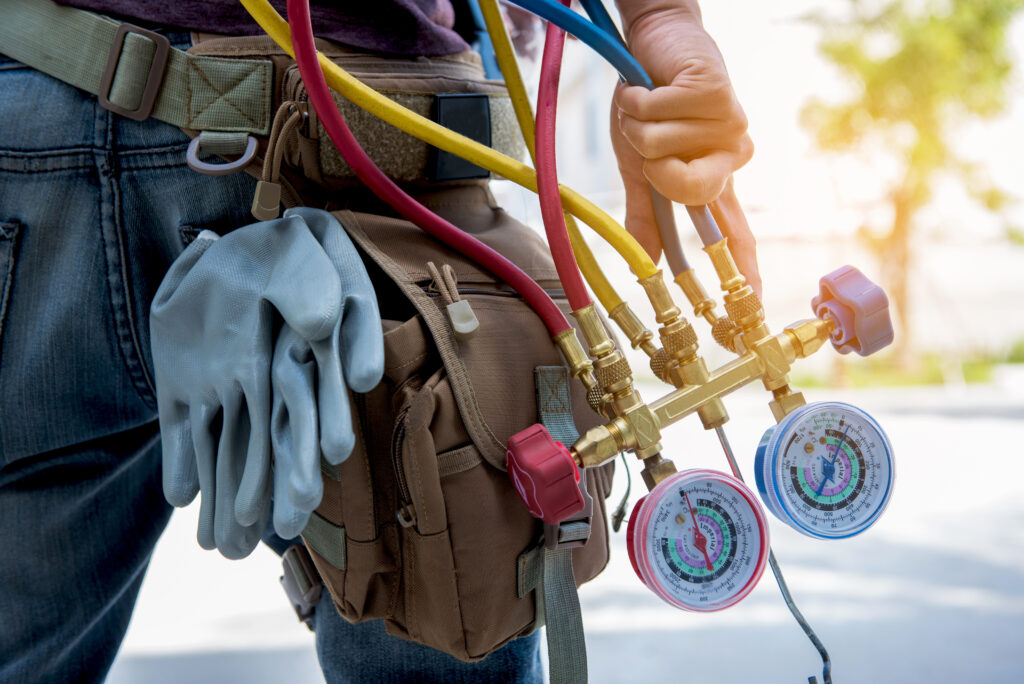
Professional maintenance can help identify problems that affect efficiency.
A typical AC maintenance visit may include checking:
- Electrical connections
- Refrigerant levels
- Airflow
- Coils
- Filters
- System performance
Use a Programmable Thermostat
Adjusting your thermostat when you’re away or asleep can reduce unnecessary cooling.
Seal Air Leaks
Gaps around doors, windows, and other areas can allow cooled air to escape. Improving your home’s air sealing can reduce the cooling load on your HVAC system.
Is a New AC More Energy Efficient?
A new AC system can be significantly more efficient than an older model, particularly if your existing system is nearing the end of its useful life.
A replacement may make sense if your system:
- Is more than 10–15 years old
- Requires frequent repairs
- Has steadily increasing operating costs
- Struggles to cool your home
- Runs for long periods without maintaining your desired temperature
However, age alone doesn’t necessarily mean replacement is required. A professional evaluation can help determine whether repairing, maintaining, or replacing the system makes the most sense.
AC Energy Use in South Jersey
New Jersey summers can put significant demand on residential cooling systems. Homeowners throughout South Jersey may see their electricity use increase during periods of high heat and humidity.
Homeowners in:
- Hammonton
- Egg Harbor Township
- Buena
- Berlin
- Tabernacle
- Waterford
- Surrounding communities
can benefit from professional HVAC maintenance and inspections to help ensure their AC system is operating efficiently throughout the summer.
Final Thoughts

The amount of power your AC uses depends on the system’s size, efficiency, age, runtime, and the conditions inside and outside your home. While you can’t control the summer weather, regular maintenance and smart energy habits can help reduce unnecessary cooling costs.
If your AC seems to be using more energy than it should, WYNNOW is here to help. We provide professional AC inspections, maintenance, repairs, and new system installations throughout South Jersey to help homeowners stay comfortable while getting the most from their HVAC system. Also if you found this blog informative, please be sure to check us out on Facebook, Instagram and X!