

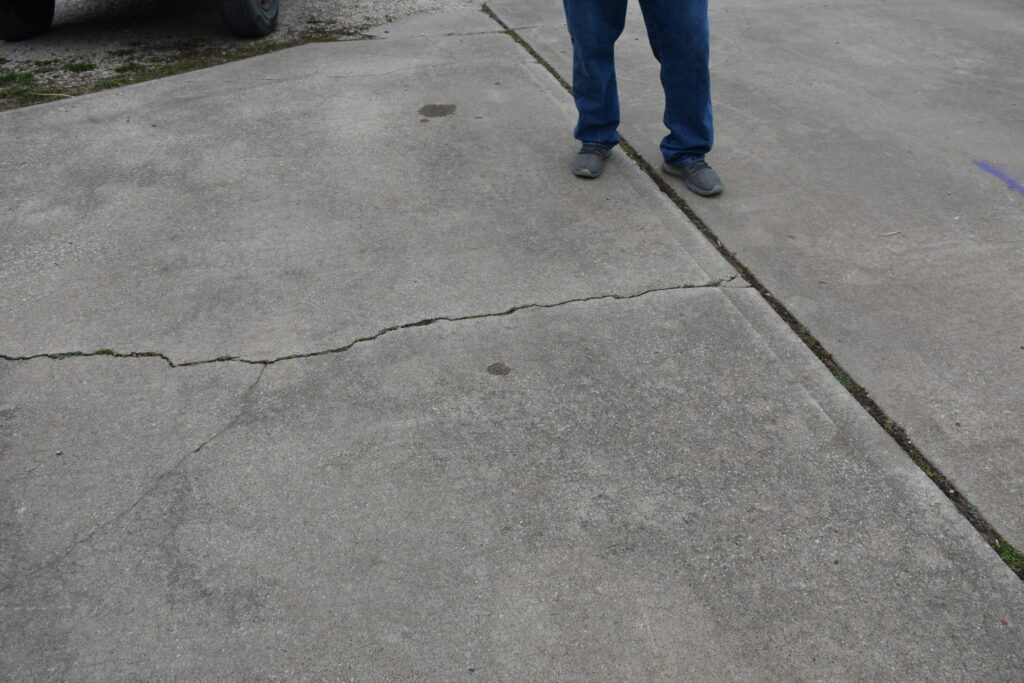
Winter in New Jersey can be tough on your driveway. Between freezing temperatures, snow accumulation, road salt, and repeated freeze-thaw cycles, even a well-installed driveway can show signs of wear by spring.
As temperatures rise, now is the time to inspect your driveway for damage before small issues turn into costly repairs.
Here’s what NJ homeowners should look for after winter.
Why Winter Causes So Much Driveway Damage
New Jersey winters create the perfect conditions for driveway deterioration:
- Water seeps into small cracks
- Freezing temperatures cause expansion
- Ice widens cracks and weakens the surface
- Salt accelerates surface breakdown
- Snow plows add pressure and scraping damage
This freeze-thaw cycle repeats multiple times throughout the season, gradually weakening asphalt and concrete surfaces.
1. New or Widening Cracks
Small cracks are common, but winter often makes them worse.
Look for:
- Cracks that are wider than ¼ inch
- Long horizontal cracks across the driveway
- Spiderweb-style surface cracking
If left untreated, cracks allow more water intrusion, leading to deeper structural damage that may require professional asphalt driveway repair.
2. Surface Scaling or Flaking (Concrete Driveways)
If you have a concrete driveway, winter salt and moisture may cause:
- Surface peeling
- Flaking or chipping
- Rough, uneven texture
This is often called spalling and can worsen each winter if not sealed or addressed with professional concrete driveway repair.
3. Potholes Forming
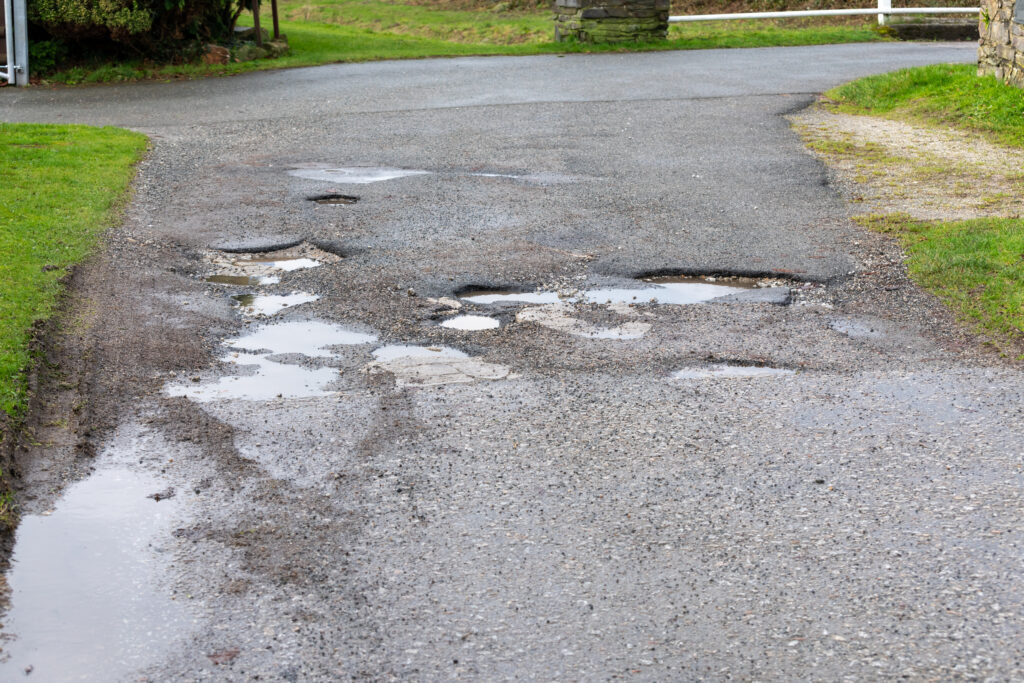
Potholes don’t appear overnight. They usually begin as cracks that fill with water, freeze, and expand.
Once a section weakens enough, vehicle weight causes the surface to collapse.
Even small potholes should be addressed quickly before they expand.
4. Sinking or Uneven Areas
Notice sections that feel uneven when driving or walking?
This may indicate:
- Sub-base erosion
- Poor drainage
- Soil shifting from freeze-thaw cycles
Uneven areas are not just cosmetic—they can signal structural issues beneath the surface.
5. Drainage Problems
Spring snowmelt and rain can reveal drainage issues.
Watch for:
- Pooling water
- Water running toward your garage
- Erosion along driveway edges
Proper slope and drainage are essential to long-term driveway durability.
6. Edge Deterioration
Driveway edges often break down first, especially if:
- Vehicles frequently park near the edge
- Snow plows scrape the sides
- The base material wasn’t reinforced
Crumbling edges can spread inward if not stabilized.
When Is It Time to Repair vs. Replace?
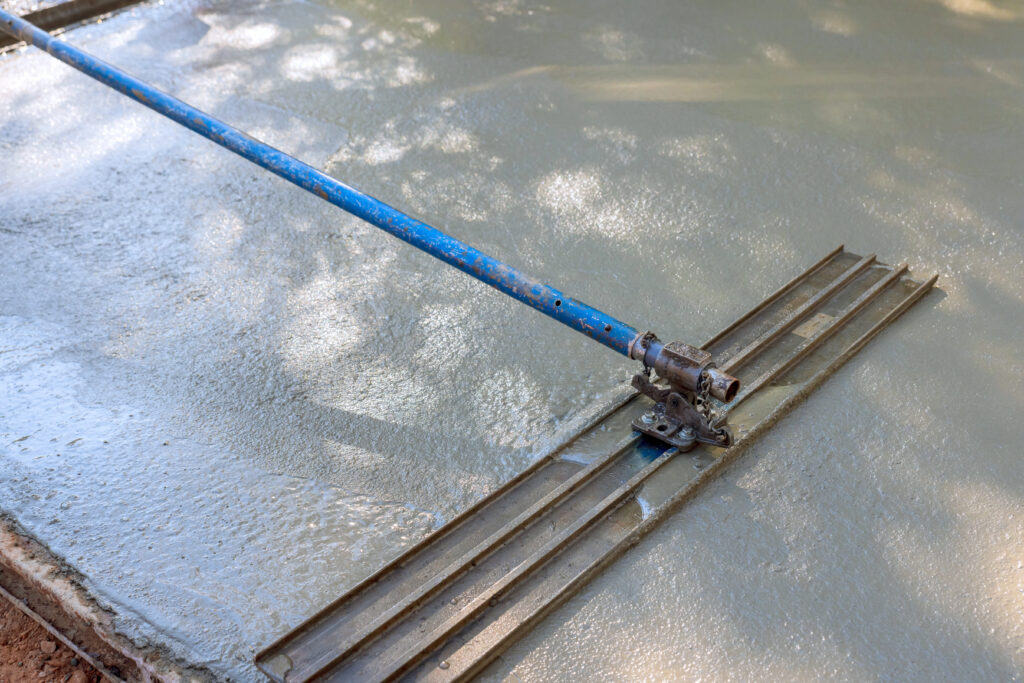
Minor issues like small cracks or early surface wear can often be repaired.
However, replacement may be necessary if:
- Damage affects more than 30–40% of the surface
- The base layer has failed
- Drainage problems are severe
- The driveway is 20+ years old
A professional inspection can help determine the most cost-effective solution.
Why Spring Is the Best Time for Repairs
Spring offers:
- Ideal temperatures for asphalt curing
- Early intervention before summer heat worsens cracks
- Prevention of water damage from spring storms
Addressing issues now helps extend the life of your driveway and protect your investment.
Protect Your Driveway Before Damage Spreads

Post-winter damage often starts small but escalates quickly. What looks like a minor crack today can become a major repair by next season.
At Wynnow, we help NJ homeowners assess, repair, and restore driveways after winter wear. Whether you need crack repair, resurfacing, or a full replacement evaluation, our team can guide you toward the right solution.
If your driveway took a hit this winter, now is the time to have it inspected. Also be sure to check us out on Facebook, Instagram and X for more if you found this blog helpful!